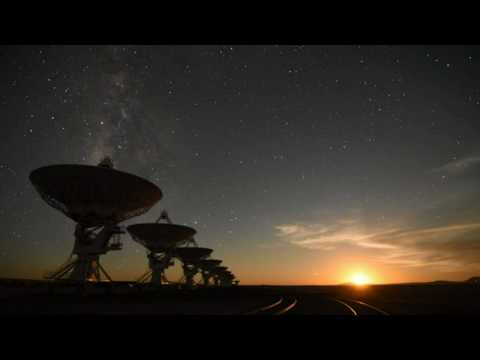
How Pulsar Timing Arrays Work
Best Explanation so far for how a Pulsar Timing Array Works, and it makes it look more analogous to an Interferometer which is sweet as.
A blog by YouTube Scientist Explorer Wanderer SonOfTerra92 https://www.youtube.com/user/SonOfTerra92
Wednesday, 15 May 2019
Tuesday, 7 May 2019
Hippo Poo Vital for Health of East Africa's Rivers
Hippo poo vital for ecosystem balance
There was a piece of News recently about how hippo feces acted as a vital carrier of Nutrients for rivers in East Africa. The large (and adorable) land fauna would eat copious amount of grass and just chill out with the herd in communal hippo pools where they would excrete the grass they had eaten.
The hippo feces contains a large amount of Silicon extracted from the grass that is vital to the health of tiny bacteria called diatoms that live further downstream all the way to Lake Victoria, the largest lake in Africa. This tiny bacteria forms the foundational basis of the diet and food chain of the Mara River in Africa and other rivers that flow into Lake Victoria.
The diatom bacteria are also responsible for carbon sequestration in the environment, that is the act of removing CO2 from the environment. CO2 is a greenhouse gas. Something that if we have too much of in the atmosphere... we die.
I shit you not
Without a thriving bacterial community the environmental balance in the area would be disastrously upset. Fish all along the food chain can't get their nutrition and a dangerous type of life-suffocating bacteria called cyanobacteria will grow to excess causing the emergence of environmental dead zones. That sounds scary.
In the light of recent catastrophes in nearby Mozambique it paints a bleak picture of the future.
The hippo population has suffered a decrease in the last decade and the numbers are projected to further drop but the actions we carry out on now will decide the fate of the hippos and the Mara River. There is still time to stop the key from turning. Once it turns there is no turning back.
It makes me think about this little image here. Credits to Annis Pratt who led me to it.
And the line from the Fourth Hindu Veda:
Whatever I dig from you, O Earth
May your mantle grow back again quickly
O Earth, Purifier, may we never injure you
Sincerely,
SonOfTerra92
![]() |
| I have good shit |
There was a piece of News recently about how hippo feces acted as a vital carrier of Nutrients for rivers in East Africa. The large (and adorable) land fauna would eat copious amount of grass and just chill out with the herd in communal hippo pools where they would excrete the grass they had eaten.
The hippo feces contains a large amount of Silicon extracted from the grass that is vital to the health of tiny bacteria called diatoms that live further downstream all the way to Lake Victoria, the largest lake in Africa. This tiny bacteria forms the foundational basis of the diet and food chain of the Mara River in Africa and other rivers that flow into Lake Victoria.
The diatom bacteria are also responsible for carbon sequestration in the environment, that is the act of removing CO2 from the environment. CO2 is a greenhouse gas. Something that if we have too much of in the atmosphere... we die.
I shit you not
![]() |
| Hippo Poo makes the Mara River go round |
Without a thriving bacterial community the environmental balance in the area would be disastrously upset. Fish all along the food chain can't get their nutrition and a dangerous type of life-suffocating bacteria called cyanobacteria will grow to excess causing the emergence of environmental dead zones. That sounds scary.
In the light of recent catastrophes in nearby Mozambique it paints a bleak picture of the future.
The hippo population has suffered a decrease in the last decade and the numbers are projected to further drop but the actions we carry out on now will decide the fate of the hippos and the Mara River. There is still time to stop the key from turning. Once it turns there is no turning back.
![]() |
| DIatoms in a Psychedelic Universe. We are all connected |
And the line from the Fourth Hindu Veda:
Whatever I dig from you, O Earth
May your mantle grow back again quickly
O Earth, Purifier, may we never injure you
Sincerely,
SonOfTerra92
Saturday, 27 April 2019
Why should we bother looking for Gravitational Waves?
26/4/2019 mid sem Holiday is almost up. I Better get started on that ASTR 800 (Advanced Topics in Astrophysics) paper.
So I want to talk about Gravitational Waves, more so the importance of finding gravitational waves.
Why do we need to find these elusive ripples of propagating space time called Gravitational Waves?
For a long time Gravitational Waves seemed to be secluded within the realm of theoretical physics. The idea was born out of the mind of Einstein while the experimentalists in the room which included Richard Feynman and Joe Weber could only dream of detecting them. Some of those early experimentalists although daring in the quest for gravitational waves are no longer with us, were not able to make it to witness the progress we have made today.
But the first Ligo Gravitational Wave observation happened in 2016 and we can now pinpoint their origins to Supermassive Black Hole Binaries (SMBHB) and Neutron Star Binaries (NSB). Wherever there are really dense astronomical objects orbiting each other in an inspriling cosmic death dance. That is where the origin of gravitational waves can be pinpointed to.
But why do Astronomers have a vested interest in detecting these gravitational waves?
Well that is an interesting question actually. I mean are not observations in the EM domain enough to learn us all we can about the Universe that we live in and the Cosmos from which we spring?
Well, I can tell you that the answer to that is No. Because of something called Multi Messenger Astronomy.
We live in the age of Mutli-Messenger Astronomy (MMA) which is this idea that we can acquire much more information about the universe by looking at signals that reach us in different ways. Here are the 4 ways that information about the Universe can reach us.
Some of things out there may be detectable by the many different media, others in singularly different ones. but there is a wealth of information that can be conveyed by analyzing the same cosmological phenomena in the different messenger media.
![]() |
Break is over, better get started on that term paper.
|
Why do we need to find these elusive ripples of propagating space time called Gravitational Waves?
For a long time Gravitational Waves seemed to be secluded within the realm of theoretical physics. The idea was born out of the mind of Einstein while the experimentalists in the room which included Richard Feynman and Joe Weber could only dream of detecting them. Some of those early experimentalists although daring in the quest for gravitational waves are no longer with us, were not able to make it to witness the progress we have made today.
But the first Ligo Gravitational Wave observation happened in 2016 and we can now pinpoint their origins to Supermassive Black Hole Binaries (SMBHB) and Neutron Star Binaries (NSB). Wherever there are really dense astronomical objects orbiting each other in an inspriling cosmic death dance. That is where the origin of gravitational waves can be pinpointed to.
But why do Astronomers have a vested interest in detecting these gravitational waves?
Well that is an interesting question actually. I mean are not observations in the EM domain enough to learn us all we can about the Universe that we live in and the Cosmos from which we spring?
Well, I can tell you that the answer to that is No. Because of something called Multi Messenger Astronomy.
We live in the age of Mutli-Messenger Astronomy (MMA) which is this idea that we can acquire much more information about the universe by looking at signals that reach us in different ways. Here are the 4 ways that information about the Universe can reach us.
- EM - Light. The classic Medium of Discovery. From Planets to Pulsars this is how its been done since back in the day.
- Gravitational Waves - Ripples of Propagating space time. These can tell us about the merging of really dense objects in the Universe. Black Holes and Netutron Stars
- Neutrinos - Elusive Tiny Particles travelling at the speed of light.
- Cosmic Rays - High Energy Particles. Can tell us about Gamma Ray bursts
Some of things out there may be detectable by the many different media, others in singularly different ones. but there is a wealth of information that can be conveyed by analyzing the same cosmological phenomena in the different messenger media.
One example is how the Gravitational Waves detected by LIGO are quickly followed up by observations by Radio Telescopes. etc.
But what really convinced me about MMA surrounds some discoveries that happened around the time of my birth (1992). That is the discovery of PSR B 1257 + 12 and the planets that surround it. Draugr, Poltergeist and Phobetor.
![]() |
| I wonder if it will have an atmosphere. Not that we really need one if we ever get to explore it. I figure we'll carry our own atmosphere with us. |
These 3 planets orbit the husk of a star that went supernova a long time ago. That star is survived today as a pulsar that periodically emits beams of electromagnetic radiation The planets were discovered by measuring the variation in Doppler shift of pulsation Period.
This planet marks the discovery of an extrasolar planet via means of Pulsar Timing. One of the worlds was discovered to be twice the size of the moon at 0.02 Earth Mass, the smallest planet ever to be discovered. In all the planets discovered by the Kepler mission in the modern age. Pulsar Timing in 1992 (the year that I was born) revealed to us a world in a category of its own. A tiny little speck orbiting a Pulsar.
That remarkable discovery was made via an indirect observation by studying subtle changes in the propagation of light. we didn't see the planet optically but implied its existence by looking at the effect it had on the pulsar signal, thus confirming its existence.
Now extend that to Gravitational Waves and the information they carry, and the things we might come to learn of when we detect Grav Waves. What new wonders undreamt of in our own time would will we discover by studying gravitational waves?
Lets find out...
Tuesday, 16 April 2019
AGNs and Cross Matching Algorithms
17/4/2019 Cross Matching in a nutshell.
The solution to this problem is: Cross Matching Algorithms
Here is a diagram of what cross matching implies:
This is what a naive cross matcher (pseudocode) would look like:
for l in range (0, len(cat A)):
for m in range (0, len(cat B)):
calculate offset = angulardistance (A, B)
if offset < radius
if offset = smallest value so far
return best_match = (A, B, offset)
Where A, B are RA, Dec values for a catalog.
These have a connection to big data, and to the whole Billions and Billions thing in the Universe. I will talk about in following entries.
We begin our story with Active Galactic Nuclei colloquially known as AGN. In a nutshell they are Supermassive Black Holes surrounded by accretion disks of matter that shoot out jets of radiation in the form of radio lobes that are pretty exotic things to see in the radio spectrum.
Here is an artists rendition:
They are primordial objects found in the early universe. To borrow a quote from Armand Delsemme "When the Quazars shone their dazzling brilliance"... that "dazzling brilliance" refers to the fact that AGNs can shine at much higher than normal luminosity in all over the EM spectrum.
And in fact they do.
The radiation from the accretion disk is brightest in Optical and Ultraviolet
The Gas and Dust that surrounds the Black Hole is visible in the Infrared
Hot gas surrounding the black hole gets heated up and emits X Rays
The jets emitted by the black hole are visible for many lightyears in radio frequencies
So we point many different telescopes in the same direction in order to see them. There's a diverse ecosystem of telescopes and eyes on the sky that humanity has at its disposal. All of which can be used to study Active Galactic Nuclei
But there is a problem. y and X-ray telescopes are located in space and orbit the Earth with different periodicity. Optical Telescopes are placed on mountain tops all over the world, and radio telescopes are situated in barren deserts tucked far away from any radio frequency interference.
How do we study the same brilliant dazzling objects with such different equipment?
Coordinating these instruments to look at the same object in the sky require a herculean task of cooperation and cross border collaboration that demonstrate capacity for humans to let go of their differences and unite in the effort of studying the Cosmos, ancient and vast from which we spring.
How do we study the same brilliant dazzling objects with such different equipment?
Coordinating these instruments to look at the same object in the sky require a herculean task of cooperation and cross border collaboration that demonstrate capacity for humans to let go of their differences and unite in the effort of studying the Cosmos, ancient and vast from which we spring.
The solution to this problem is: Cross Matching Algorithms
Here is a diagram of what cross matching implies:
![]() |
| Cross Matching Astronomical Objects from different Catalogs. VLA, SDDS, Hubble |
for l in range (0, len(cat A)):
for m in range (0, len(cat B)):
calculate offset = angulardistance (A, B)
if offset < radius
if offset = smallest value so far
return best_match = (A, B, offset)
Where A, B are RA, Dec values for a catalog.
These have a connection to big data, and to the whole Billions and Billions thing in the Universe. I will talk about in following entries.
Thursday, 11 April 2019
Matlab FFT on Sinusoidal Code
amp = 3;
freq = 5;
phi = pi/4;
fs = 50;
Ts = 1/fs;
l = 1; %second samples
sineWaveFunc(amp,freq,phi,Ts,l)
plot(t, s)
xlabel('time')
ylabel('Amplitude')
title('sineWave')
myPow = calcPower(fs, freq, s);
myFFT = findFFT(s);
%calculate power
N = length(s) + 1; % to be even :)
S = fft(s,N);
SdB = 20*log10(S); % or SdB = mag2db(S);
freqs = (0:N/2-1)*fs/N;
figure(2)
plot(freqs, SdB(1:N/2))
xlabel('frequency')
ylabel('amplitude')
title('spectrum')
function sinFFT = findFFT(s)
N = length(s) + 1;
sinFFT = fft(s, N);
%plot(sinFFT, N)
end
function pow = calcPower(fs, freq,s)
Nsamp = round(fs/freq);
pow = (1/Nsamp)*sum(abs(s(1:Nsamp)).^2);
end
function [s , t] = sineWaveFunc(amp,freq,phi,Ts,l)
t = 0:Ts:l;
s = amp*sin(2*pi*freq*t + phi);
end
freq = 5;
phi = pi/4;
fs = 50;
Ts = 1/fs;
l = 1; %second samples
sineWaveFunc(amp,freq,phi,Ts,l)
plot(t, s)
xlabel('time')
ylabel('Amplitude')
title('sineWave')
myPow = calcPower(fs, freq, s);
myFFT = findFFT(s);
%calculate power
N = length(s) + 1; % to be even :)
S = fft(s,N);
SdB = 20*log10(S); % or SdB = mag2db(S);
freqs = (0:N/2-1)*fs/N;
figure(2)
plot(freqs, SdB(1:N/2))
xlabel('frequency')
ylabel('amplitude')
title('spectrum')
function sinFFT = findFFT(s)
N = length(s) + 1;
sinFFT = fft(s, N);
%plot(sinFFT, N)
end
function pow = calcPower(fs, freq,s)
Nsamp = round(fs/freq);
pow = (1/Nsamp)*sum(abs(s(1:Nsamp)).^2);
end
function [s , t] = sineWaveFunc(amp,freq,phi,Ts,l)
t = 0:Ts:l;
s = amp*sin(2*pi*freq*t + phi);
end
Tuesday, 9 April 2019
DSP and Astronomy
10/3/2019 Astronomy = (DSP + Statistics + Data Science)
Look at this slide about windowing from DSP Guru Mitra
So that is what this massive phallic construct does:
Which can be broken down into geek speak like this:
So if you have the infinities of a pulsar signal (That's artist embellishment right there) and apply all those DeDispersions, FFTs, phase binning. Then we can get a limited sequence called a power spectrum in terms of frequency and time.
Or we can use it to blow each other up and all that other planetary chauvinism stuff.
Look at this slide about windowing from DSP Guru Mitra
Sequence/Pulse Windowing is the act of turning a infinite length sequence into a finite length sequence by applying a window sequence
So that is what this massive phallic construct does:
Which can be broken down into geek speak like this:
Radio Telescopes are windows on the Universe
So if you have the infinities of a pulsar signal (That's artist embellishment right there) and apply all those DeDispersions, FFTs, phase binning. Then we can get a limited sequence called a power spectrum in terms of frequency and time.
| Its just a windowed sequence of values |
Or we can use it to blow each other up and all that other planetary chauvinism stuff.
Monday, 1 April 2019
Matlab Discrete Sinusoid
2/4/2019 Creating Discrete Sinusoidal
I'm going to go learn Cyclic Spectroscopy for Radio Astronomy Applications. Got distracted, plotted Sinusoids in Matlab instead.
a = -80;
b = 80;
n = a:b; %sample length
fs = 0.0125;
phi = 0;
Amp = 6;
x = Amp*sin(2*pi*fs*n - phi);
x2 = (-Amp)*x
clf
stem(n, x, '-o')
axis([0 b -2 2]);
grid;
title('sinusoid')
xlabel('Time index n')
ylabel('Amplitude')
axis
%plotting an evil twin
hold on
stem(n, x2, '-*')
I'm going to go learn Cyclic Spectroscopy for Radio Astronomy Applications. Got distracted, plotted Sinusoids in Matlab instead.
![]() |
| I think it looks pretty |
a = -80;
b = 80;
n = a:b; %sample length
fs = 0.0125;
phi = 0;
Amp = 6;
x = Amp*sin(2*pi*fs*n - phi);
x2 = (-Amp)*x
clf
stem(n, x, '-o')
axis([0 b -2 2]);
grid;
title('sinusoid')
xlabel('Time index n')
ylabel('Amplitude')
axis
%plotting an evil twin
hold on
stem(n, x2, '-*')
Subscribe to:
Posts (Atom)
Diaries of an Aspiring Astrophysicist (DAS Astro) Podcast
Diaries of an Aspiring Astrophysicist Episode 1: The last year has been weird Episode 2: Cosmic Collisions and Gravitational Wa...
-
How Pulsar Timing Arrays Work Best Explanation so far for how a Pulsar Timing Array Works, and it makes it look more analogous to an Inter...
-
Database Column Name Table Label Description 0 pl_hostname Host St...
-
Diaries of an Aspiring Astrophysicist Episode 1: The last year has been weird Episode 2: Cosmic Collisions and Gravitational Wa...